

A blog to help you navigate the difficulties of life

Counselor Spotlight: Allison Griffin
Finding a space of belonging is a rare thing to find in the world, which is why I love to provide that space for the people I meet.
One of the most meaningful things I get to experience as a counselor is that I get to see people for exactly who they are. Finding a space of belonging is a rare thing to find in the world, which is why I love to provide that space for the people I meet.
I'm often struck by how such ordinary things teach me the biggest lessons. My most recent lesson came from my little flock of sheep. One of our lambs had to be bottle fed, as his mama abandoned him. As I was feeding him one day, I had a thought come to mind - how many people in the world must feel like my little lamb? How many of us feel abandoned, rejected, afraid, and alone? How many of us are looking for a place to belong?
I can count many times in my life where I’ve felt those things and have hid my true self just to fit in. To pretend to be somebody I wasn’t made me feel trapped. I’ve been blessed to find spaces where I get to be my true self, and have found so much freedom in those spaces.
My hope for anyone who makes the brave decision to meet with a counselor is that as they enter into that space that they can be received exactly as they are, and that they can experience the same freedom I have experienced.
By Allison Griffin, Provisional Licensed Professional Counselor

ANXIETY | Is it an enemy, or is it a friend?
There’s this thing that happens to all of us from time-to-time, where we have so much “ahhh” and emotional overwhelm that we have no idea what to do. It’s like our ability to think gets log-jammed with whatever anxiety-inducing thing just showed up. And then…we forget what direction is up and what direction is down.
There’s this thing that happens to all of us from time-to-time, where we have so much “ahhh” and emotional overwhelm that we have no idea what to do. It’s like our ability to think gets log-jammed with whatever anxiety-inducing thing just showed up. And then…we forget what direction is up and what direction is down.
For you, it might be an unexpected argument with your spouse that shows up out of nowhere. You’re in the middle of a normal day, a verbal tussle breaks out, and something is said that magically (tragically) takes away all of your ability to piece together a sentence or rebuttal. For me, it can be a number of things: an uninvited barking dog, a wailing cry from my son, or being around someone who comes across as lazy or negligent with their life. They each can push my equilibrium into a space of disarray.
Familiar?
We’ll call this thing anxiety. Some counselors might call it hyperarousal and others might just call it overwhelm. But I’ll go out on a limb and call it anxiety. Anxiety is the thing that log-jams our mind and pushes our equilibrium into a space of disarray. It’s our body’s learned response to some outside (or inside) trigger, and it makes us feel countless things the moment we start to experience it. Sometimes, it solicits this feeling of “I’m crazy and no one understands.” Other times, the anxiety gives us this feeling that says “we have to get this ______ done, or else.” It’s the inexplicable desperation, the “aliens-are-after-me” fear, and the “why is everyone so terrible to me” type feeling. That’s anxiety.
Familiar?
If I had to guess, you’d say that anxiety is an enemy. It sneaks up on you when you’re not looking, tries to shut you down, attempts to shut you up, and tries its hardest to push you over the edge. The reality, though, is that anxiety is part of our design. Better yet, it’s a great momentary friend. Anxiety is the bodily response that can begin to tell us more about ourselves and more about the ways in which we can process, grow, and change. We can learn from it, we can use it, and we can be thankful for it.
Here’s how to use your anxiety the next time your heart rate skyrockets and you don’t know how to think or process.
ASK YOUR BODY:
Where am I feeling such strong overwhelm or confusion right now? (Chest, hands, head, neck, throat, a really fast heartbeat?)
ASK YOUR INNER SELF:
What am I feeling on the surface, right now? (Anger, Fear, Hate?)
ASK YOUR INNER SELF:
Why might I be feeling that specific emotion? (Am I not feeling heard? Am I feeling overlooked? Am I feeling helpless? Am I feeling betrayed? Am I feeling abandoned?)
TELL YOUR INNER SELF:
My inability to think right now is understandable, and I’m not crazy, because that feeling of being abandoned is a real feeling. And because that’s such a strong feeling, my body literally doesn’t know what to do with this circumstance. And that’s okay, I just have to keep processing this.
ASK YOUR INNER SELF:
What can I do right now to try and better understand this anxious moment? (Should I ask for 30 seconds of space to walk around, breathe, and tell myself a few truths that I know are true? Should I ask the person to clarify the thing they said that triggered me? Should I share about my inability to process and open up about the specific emotion I’m feeling?)
TELL YOUR INNER SELF:
It’s okay to get anxious, and I’m not crazy for having such a “hot mess” sort of feeling right now. I’m going to take note of this anxiety that I experienced from this feeling that showed up and learn from it right now and for the future.
MAKE A DECISION:
If the thing that triggered you was a person or part of a conversation with someone, make the decision to make a decision that allows you to get out of the overwhelming state of anxiety and back to a clear-thinking mind and posture.
Though this might feel programmatic or unhelpful or silly, I’d almost guarantee that if you were to practice this sort of inner-conversation the next time you hit an anxious moment or anxious day, you’d learn from it and likewise begin to reach emotional stability far sooner. There’s little risk in doing so and great gain if you give it the chance!
By Nick Sweerin, Restorative Mentor
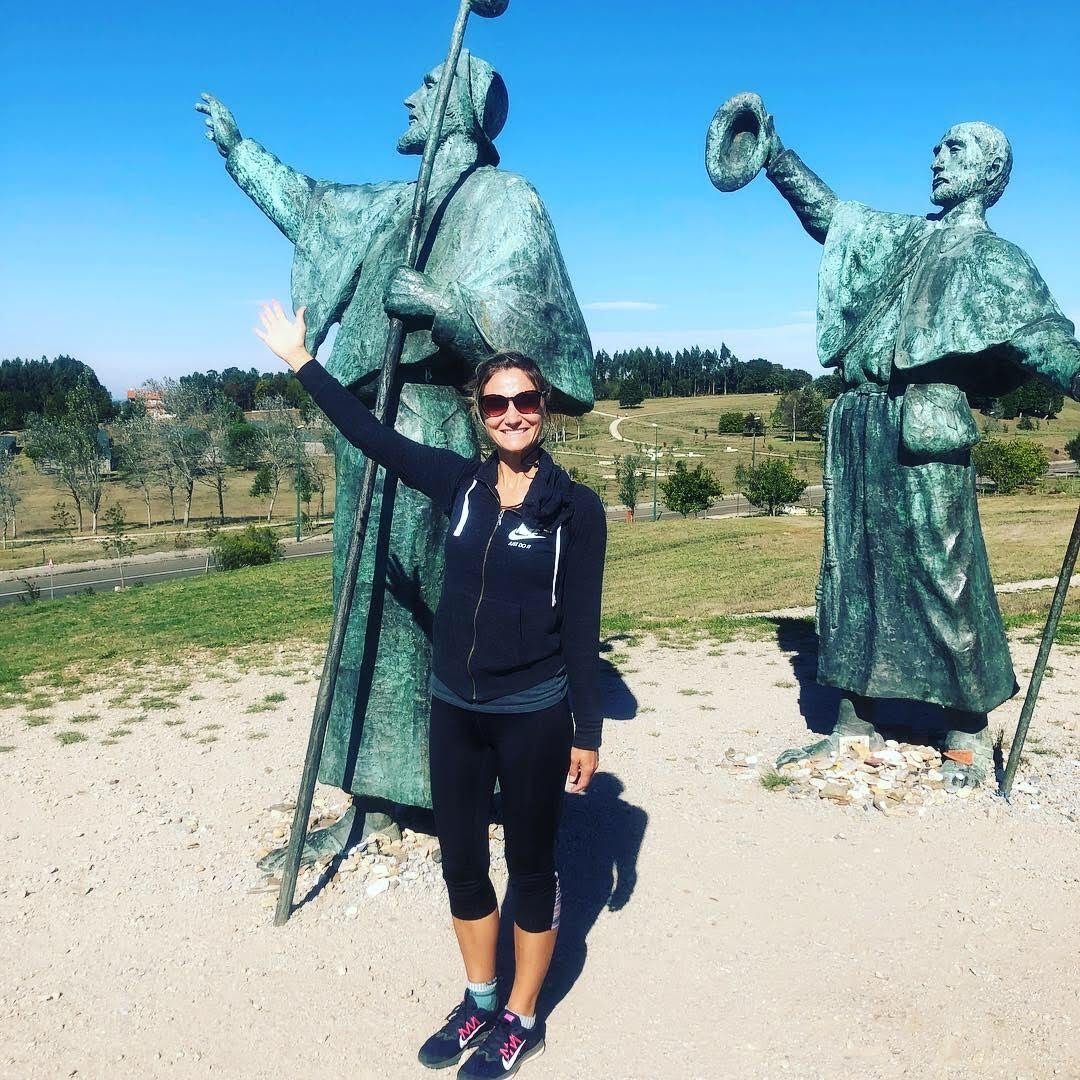
“The Slow Walk”- Spiritual Direction for Life
I realized two things in that moment. First, ignoring or denying what was going on inside me was no longer the path I wanted to choose. And secondly, God was just as actively present in this inward journey as He was when I was doing all the things and taking care of all the people.
I was walking somewhere in the middle of “El Camino” trail in Northern Spain when the panic began to build inside me. I had chosen to walk a portion of the nearly 500-mile pilgrimage hike as my attempt to connect with myself and God, and it wasn’t working. My vision had started blurring as I looked out on the miles of trail ahead of me. I felt untethered and out of control, the experience of leaving my responsibilities no longer a fun daydream, but a terrifying reality. Who was I when I wasn’t caring for someone’s emotional or spiritual needs? What would I do without an ever-growing task list to drive me through the day? What was left when my “purpose” was no longer accessible?
The practical answer was unavoidably clear. All I could do was walk. My phone was disconnected and my re-entry to civilization was still over a week in front of me. So, I walked. And I felt a level of fear that took me totally by surprise, the newly exposed, vulnerable me so different than how I would have described myself. Still walking, days later, the fear finally began to release, leaving behind it a gift. Awareness. I could no longer ignore or deny the disconnect within me, one that both necessity and my own choices had widened throughout the years.
I realized two things in that moment. First, ignoring or denying what was going on inside me was no longer the path I wanted to choose. And secondly, God was just as actively present in this inward journey as He was when I was doing all the things and taking care of all the people.
The most common response I hear after explaining that I am a Spiritual Director is “oh cool, and um….what is that again?” Spiritual direction, in essence, is taking “the slow walk” through your life and circumstances. It is choosing your own internal pilgrimage, whether you find yourself in a season of transition with a lot of unknowns, or you are recognizing an increased desire to experience God in places that have felt dry or disconnected. A Spiritual Director will walk beside you, keeping the pace steady, and notice with you both the inward and external circumstances where God might be speaking or leading you in your journey.
One of my favorite parts along my walk was adding my own rock to the piles of mismatched stones and pebbles that were placed in tiny white mountains at every crossroads or mile marker along “El Camino”. For some, it was a symbol of gratitude for having made it to that point or a memory of those who are always carried with us. However, for many following a Biblical faith tradition, it marked our testimony of the faithfulness and presence of God, saying to everyone who sees, “Thus far, God has helped me.”
If your present circumstances are telling you to slow down, you might consider the following reflection. Find a quiet, uninterrupted space. In this space, ask yourself a few questions: What is preventing me from slowing down? What fears rise up when I think about slowing down? Is there an area of my life where I need to stop to remember God’s faithfulness to me?
All that to say, I pray that wherever the walk takes you today, whether racing through endless tasks or to an abrupt stop at a wall of emotion, that each moment would be marked with a holy awareness; we never walk alone.
By Kristy Dees, Spiritual Director

The Greatest Expectation
Have you ever been let down by your own expectations?
We carry expectations in this life and jump into them as if we are jumping into the deepest, fullest, ocean. But instead we jump into a shallow pool. For our finite minds think that our expectations will hold us together, will always be met, and will never let us down.
Have you ever been let down by your own expectations?
We carry expectations in this life and jump into them as if we are jumping into the deepest, fullest, ocean. But instead we jump into a shallow pool. For our finite minds think that our expectations will hold us together, will always be met, and will never let us down. How many times have you asked yourself ,“God, if you are really good, then why did that thing that I expected to happen not happen?”
Our hearts break when we are met with the painful reality of unmet expectations. Our souls sink when we have to find a different way around when we thought we’d be going the same way forever. We have to re-orient ourselves. But sometimes, we re-orient the wrong way- the opposite way. Our Abba Father calls us to reorient back to Him, but because we feel shame for our hope filled, never-breaking, all-consuming expectations…we hide. As if our Abba Father is surprised.
We hide and expect Him to be surprised. Like we are children playing hide and seek behind a sheer curtain, but we don’t peek out from the curtain like curious children do, we tend to stay hidden. When we hide because of the shame we feel from our let down expectations, we expect our Father to respond to us like the way we respond to ourselves. “Shouldn't you know better?” But that’s not the Father. Instead He finds us, and in our hiding place, He replaces our shallow expectations of the world with the most tender hearted, everlasting, forever-fulfilling expectation of all time. He takes our broken expectations and not only mends them, he replaces them with something even better.
Himself.
Emmanuel. God with us. The expectation we can carry with us till the end of our days. That no matter what, no matter who, no matter where….Emmanuel. God is with us. We can expect that with absolutely no question in return. When every expectation we have lets us down, we have the ever-present expectation that we have a God that is with us. When that relationship you thought would last forever ends, when that job that you thought you would get does not get back to you, when your family gathering ends in shambles. When every expectation crumbles down, there is a steady hope that will never crumble down, that will never disappoint, that will never leave us in shame.
The expectation that in everything we do, our God is with us. Do you believe it for yourself yet? That when you stand in your kitchen at 3 pm, crying over something that happened last week, your Father is with you? That when your child says something painful to you, your Father is with you? Think of whatever is happening in your life. And I promise you that the greatest assurance you can have in the midst of shattered dreams, is a God that promises to never leave.
By Christina Thomas

“Go, Go, Go … or Go, Go, No?” | The Tension Between Running + Resting
“You are not required to set yourself on fire to keep other people warm.”
Working in ministry and working as a mentor in people's lives continually puts me in a position to be with people: listening to them, trying to empathize with them, trying to faithfully serve them. 9 times out of 10, I love that I get to live life that way.
A couple weeks back, though, I read a convincing quote by an unknown source that began to challenge an aspect of my people-oriented lifestyle in ministry and counseling:
“You are not required to set yourself on fire to keep other people warm.”
Ever since following Jesus in a more intentional way, I’ve always felt that “setting ourselves on fire” in a figurative way “to keep other people warm” was a good and godly attribute.
Jesus listened to others, so I listen to others.
Jesus helped others, so I help others.
Jesus died to self interest, so I die to self interest.
Yet, as I hold the reality of Jesus’ life and actions in mind while also holding the meaning of the quote in mind, I sense a good bit of tension. In one part of me, I hear Jesus telling me to “give everything and to die to myself for the sake of others” while another part of me is saying “slow down and stop sacrificing so much for the good of others" because of that author's quote. A tension point, for sure.
If you’re anything like me, something about “being set on fire to keep other people warm” feels really life-giving. In a weird way, that statement alone serves as a magnet to my heart. But now, as I begin living life as a husband and father, I’m beginning to learn the beauty of setting boundaries with serving others and noticing that disaster unfolds when I don’t. I’m learning to open up my Bible and see that God the Father rested on the seventh day (Genesis 1-2), that God the Son went out in the wilderness to seek out solitude (Luke 5), and that God the Holy Spirit is called the comforter with reason (John 14). In a sense, I’m learning that God Himself embodies rest and boundaries so that I could both enjoy Him and not burn myself up in disaster.
Next time I want to be “go go go” with anything and everything in life, I need to slow down and set some boundaries to guard my schedule and health. (And if I had to guess, maybe you do, too). As you go, remember that there's beauty and purpose in saying no, because in saying no we get to say yes in being with Him, ourselves, our families, and those closest to us in an intentional and intimate way.
By Nick Sweeerin, Restorative Mentor

Prioritize Your Mental Health This Year
How can I prioritize my mental health, and what happens when I neglect it?
For many people, the beginning of a new year is a time of renewal. Resolutions fill social media feeds, one-on-one conversations, time with friends and family, you name it. While there is nothing wrong with wanting to better oneself, oftentimes the focus is on physical rather than mental health. I hope as you read this article, you discover the need to prioritize your mental health this year, and find ways to begin.
Why should I prioritize mental health?
For one thing, neglecting your mental health can lead to burnout. Physical signs of burnout include exhaustion, weakened immune system, frequent headaches, muscle aches, and changes in appetite and/or sleep habits. Emotional signs include a sense of failure, self-doubt, helplessness, low motivation, cynicism, detachment, feeling alone, and decreased satisfaction and/or sense of accomplishment. Behavioral signs include procrastination, taking frustrations out on others, withdrawing from responsibilities and/or loved ones, skipping work, coming in late and leaving early, and using food, drugs, and/or alcohol to cope. Needless to say, we cannot function well unless we take care of ourselves.
Secondly, The Lord commands us to rest for our own good. Jesus gives us perfect examples of what it looks like to prioritize mental health. He often took time away from people in order to become closer to God and for mental restoration. Refer to Luke 5:16. The God of the Universe wants you to draw close to Him and to experience mental restoration.
How do I make my mental health a priority?
Making your mental health a priority takes time and practice. For me, I used to thrive in overworking myself. As you can imagine, that quickly caught up with me. I began getting irritable with my loved ones, dreaded doing tasks I used to love, and was constantly exhausted. It wasn’t until I made my own mental health a priority that I could love and serve others fully.
One obstacle many people face is time. However, taking time for yourself doesn’t have to be lengthy. Setting a timer can be helpful as you begin. I encourage you to carve 5 to 10 minutes out of your day for self-care, and work your way up to longer periods of time. Additionally, placing a designated time on your calendar for self-care can be a great way to hold yourself accountable.
Another obstacle is knowing what to do during that time. I get it! Starting out, I would be so bored that I couldn’t even enjoy time taken for myself. I suggest finding a short guided meditation to begin. For me, guided meditations keep my mind from wandering and help me stay in the present moment. Other things you can do include going for a walk, journaling, and praying.
Lastly, it is common to have feelings of guilt and shame emerge when taking time for self-care. While it might seem selfish to take time for ourselves, it is actually quite the opposite. We cannot pour from an empty cup. We cannot wholeheartedly give to others mentally, Spiritually, emotionally, nor physically if we are not our best selves. Be gentle with yourself if you notice these thoughts come up, and remember Jesus’ examples of prioritizing mental health.
I hope you find permission and motivation to make your mental health a priority this year. If you feel burned out, know there is a way out. We at Restore Counseling Services want to help you become your best, authentic self.
By Allison Griffin, Provisional Licensed Professional Counselor

God’s Common Grace When Parenting Moments Go Wrong
In some Christian circles, there is an idea termed as God’s common grace, a general gift of God granted without any specific belief, any particular request, or any certain discipline. It’s breath in the lungs, a feeling of optimism out of nowhere when you don’t know why, or an unexpected sunny day when you thought it was going to rain.
I recently learned a parenting stat that’s riddled with this sort of grace. It blew my mind, and it gave me hope. Let me take a few moments to distill it.
In some Christian circles, there is an idea termed as God’s common grace, a general gift of God granted without any specific belief, any particular request, or any certain discipline. It’s breath in the lungs, a feeling of optimism out of nowhere when you don’t know why, or an unexpected sunny day when you thought it was going to rain.
I recently learned a parenting stat that’s riddled with this sort of grace. It blew my mind, and it gave me hope. Let me take a few moments to distill it.
In the counseling world, there’s this thing called “attachment.” As written by Adam Young of Adam Young Counseling, attachment “refers to the emotional bond that you develop with a person.” Put in other words, it’s a way of defining the style and health of a given relationship. For the sake of this writing, we’re going to mainly be talking about children’s attachment to their parents.
The two broadest types of attachment, gathered from the APA website, are shown below:
Secure attachment is “the positive parent–child relationship, in which the child displays confidence when the parent is present, shows mild distress when the parent leaves, and quickly reestablishes contact when the parent returns.”
Insecure Attachment is “generally (a) negative parent–child relationship in which the child fails to display confidence when the parent is present, sometimes shows distress when the parent leaves, and reacts to the returning parent by avoidance or with ambivalence.” (Ambivalence, meaning mixed or contradictory feelings).
The hope-filled statistic and common grace of God that I learned in regard to attachment between children (aged 0-3) and their parents is this: we as parents have a 70% threshold of grace. Meaning, we can foster a secure attachment relationship with our kids even if 70% of the time we misread their needs or respond negatively. Case in point, if I happened to lose my cool and tense up pretty frequently when trying to put my son down for a nap in the first few weeks of his life, his well-intentioned-yet-very-human-father (...Me) was able to maintain secure attachment by caring for him with patience and compassion in the realms outside of the difficult nap times. Even though I failed, health remained.
The hope to embrace is that even if you’re a parent or become a parent who makes some mistakes and drops the ball in the early years, grace and reconciliation can often be found. Whether it’s through learning to ask for forgiveness or whether it’s through beginning to listen and support your kids in a new and honoring way, a positive parent-child relationship can often be restored to a place of security and health. And on the outside chance you’re a parent reading this who has kids beyond the age of 3, know that different types of insecure attachment as a result of your parenting methods can often find restoration as well.
Thanks be to God for the common grace we get from our kids as young parents!
(See Greater Good’s article on the 70% statistic, here).
By Nick Sweerin, Restorative Mentor

Above the Surface + Among the Shadows
After something tough or unexpected happens in life - whether an event or conversation or whatever - I’ve often found myself thinking that I understand what happened, but I don’t understand what I feel. I can piece together what took place, but I can’t piece together what’s within me. Above the surface, I see some details and conjure up a decent explanation of what occurred. But below the surface, I’m left bewildered and likewise pretty disengaged emotionally. Been there? Me too.
After something tough or unexpected happens in life - whether an event or conversation or whatever - I’ve often found myself thinking that I understand what happened, but I don’t understand what I feel. I can piece together what took place, but I can’t piece together what’s within me. Above the surface, I see some details and conjure up a decent explanation of what occurred. But below the surface, I’m left bewildered and likewise pretty disengaged emotionally. Been there? Me too.
Above the surface represents our intellect and that which is seen. It represents our innate ability to store information and relay facts. We can retell that “this and this happened while so and so were talking through some stuff.” And then we can share how “it made us mad.” We’re really good at explaining the stuff above the surface. But oftentimes, there’s a difficulty in putting our finger on what the facts and information around us actually do within us. Among the shadows represents just that. Among the shadows are the hidden parts of our inner being and emotional response. It’s where the sick-feeling in our gut lives. The tightness in our chest. The weariness in our bones.
Life became a lot fuller when I began to realize that the “unknowable” shadows of my inner self could be explained, understood, and purposed. The tightness in my chest during a hard conversation with my wife, for example, could actually be (1) diagnosed by myself in the moment, (2) communicated out loud to my wife, and in turn (3) become an advocate and problem solver for both her and I to best understand the realities at hand. The tightness in my chest could reveal past hurts, personal values, and even signal expectations and desires for the moment and for the given topic as a whole. Digging beneath the surface in this instance alone exposed the potential riches of understanding my wife and I could have when I was willing to go beyond the details to the depths of my being. Though it took a pause and a conscious question of “what am I feeling within me right now,” it led to a fuller understanding for the both of us. Going below the surface and among the shadows was suddenly possible and with purpose.
Here’s a thought for you. When your next conflict shows up or an unexpected event takes place, don’t just relay the facts to yourself and others around you. Don’t give in to the temptation to just dialogue or regurgitate or react. Instead, slow yourself in the moment and dive beneath. Go among the shadows of what you’re feeling in the depths of your head, heart, and hands and follow through with the following steps:
Ask “what am I feeling within me”?
Share that unperfected but raw finding with whomever you’re at odds with.
Share what you might be learning from that feeling as you guys work through the topic at hand.
I bet if you try it, you will quickly find that the human body not only pieces together what takes place above the surface but also pieces together rich purposes to what we feel among the shadows as well.
By Nick Sweerin, Restorative Mentor

Loneliness
Most, if not all of us, have experienced loneliness at some point in our lives. Social isolation brought about by Covid-19 has increased feelings of loneliness among many. While the world around us is somewhat getting back to “normal,” the effects of loneliness still linger.
Most, if not all of us, have experienced loneliness at some point in our lives. Social isolation brought about by Covid-19 has increased feelings of loneliness among many. While the world around us is somewhat getting back to “normal,” the effects of loneliness still linger. Loneliness is not a new concept, however. Even King David described loneliness in Psalm 142:4, saying “Look and see, there is no one at my right hand; no one is concerned for me. I have no refuge; no one cares for my life.”
While many of us have experienced it, we might not all know what to do with it.
The first step to overcome loneliness is to examine your feelings. Loneliness occurs when one feels alone, not necessarily when one is physically alone. One can feel lonely in a crowd of people. On the other hand, one might not feel lonely at all in social isolation. Common feelings that accompany loneliness include sadness, emptiness, aloneness, and feeling unwanted or abandoned. If you can relate with any of the feelings listed above, know you are not alone in these feelings of loneliness. Many people have experienced or are experiencing the same thing.
The next step to overcome loneliness is to increase connection. Two of our most basic needs include connection and belonging. Therefore, it is crucial to maintain connection when facing loneliness. The God of the universe wants to rescue you and connect with you, as King David described in Psalm 142:6. He hears you and wants to set you free from the bondage of loneliness. Prayer and meditation are excellent ways to strengthen your connection with God. In addition, we have been created as social beings and need a community. One way to get involved with your community is to strengthen existing relationships, such as with friends and family. Pick up the phone or schedule a coffee date! This does not have to be complex. Other ways to get involved include attending Church, volunteering, or joining a support group.
Lastly, be gentle with yourself. The emotions you are experiencing are valid. It can feel shameful and scary to experience these emotions, but I encourage you to approach these emotions in a gentle and curious way. Take time to take care of yourself, both physically and mentally as you go through this process.
It is important to note that experiences of rejection from past relationships can further complicate loneliness. For some, reaching out can be scary, and that’s okay!
Loneliness is difficult, to say the least. If you are experiencing loneliness, know that we at Restore Counseling are here for you. We understand the complexity of loneliness, and are more than happy to provide you with the kindness and support you deserve.
By Allison Griffin, Provisional Licensed Professional Counselor

You Are Not a Burden
Most of us, at one point or another, have wondered whether our struggles are burdensome to those around us. Sometimes that message has been directly communicated, sometimes it has been implied, and other times we have assumed it must be true.
I’m curious about what you felt as you read this headline: You are not a burden. Did it come as a sigh of relief? Did it rub up against your deeply held notions of yourself, or of how others perceive you? Or maybe it jogged a memory that communicated otherwise, a painful past moment where someone you relied upon made you feel unworthy of receiving their care.
Most of us, at one point or another, have wondered whether our struggles are burdensome to those around us. Sometimes that message has been directly communicated, sometimes it has been implied, and other times we have assumed it must be true.
All of us deeply desire to experience something different. But it can feel like too much to ask for or expect from others.
I spoke with a friend the other day about chronic illness. She shared that beyond the physical pain she experiences regularly, there were also emotional and social struggles. The thoughts that lingered below the surface were, "I hate feeling like my situation is burdening or inconveniencing the people in my life. That's not what I want. I don’t want them to associate me with my struggle."
She said she'd had difficulty even asking her close community to pray for her, because her suffering was ongoing. There was no neat and tidy beginning or end. The idea that she would have to keep asking for prayer and support was uncomfortable for her.
I gently reminded her that for the people who know and love her, she is not a burden. Her need for help and support is not bothersome to us. Because we love her, we absolutely want to be there for her.
Another person I know has had some very painful losses in her life. Grief looms large, and trauma is very present in her story. She struggles to believe that her friends really do want to be there for her (she has been let down many times by people she should’ve been able to count on). She also fears causing those close to her any additional pain or sadness. Because of all of this, she has made a practice of dealing with the hardest stuff on her own.
However, in times when she has gathered the courage to be vulnerable, she has been met with such kindness and care from her friends. Even when she begins to isolate herself, she has people in her life who are checking in and making sure she’s okay.
And of course, I’ll never stop telling my own story. When my husband and I stepped into a season of foster care, we realized immediately that we could not do it alone. There were desperate last minute calls asking for friends to come over as soon as they could. We received meals and cried in the arms of others. One friend even slept on our couch for a night and checked on the babies in a period of intense sleeplessness. We were shameless in our asking, because we knew we would not make it otherwise.
Sickness, unhealed trauma, stress, and anxiety-- these are experiences that all of humanity has in common. So I wonder why we are so quick to believe this idea that our own particular struggles are too much. We are too much.
If this is a message you’ve internalized, if it has kept you from reaching out to others when you’ve most needed to, please hear me again: You are not a burden.
My hope is that you would begin to believe this to be true. That fear or shame would not keep you from speaking up about your suffering to those you trust. That you’d know that those, like me, who have the privilege of holding your story do so with great care and compassion.
To walk with each other through the difficulties of life, making space to listen and meet needs and cry together, all of this is a gift. Let’s not go it alone. And remember: You are not a burden.
By Allison Wopata, Certified Clinical Trauma Specialist/Restorative Mentor

Be Still and Know
Why is it important to focus on stillness before acquiring more knowledge?
Psalm 46:10, “Be still, and know that I am God;” is a commonly quoted verse. While this passage has brought me some comfort during difficult times, I didn’t truly understand its importance until recently.
It’s no accident that God first said “be still” then said “and know.” To be still means to calm our minds AND bodies. Stillness initiates our parasympathetic nervous systems, which are responsible for relaxation. Our sympathetic nervous systems, on the other hand, become activated when we are overwhelmed. When our sympathetic nervous systems are activated, our brains go into survival, or fight or flight mode. In other words, stress tells our brains we are in danger. When this happens, our brains turn off everything except what we need to stay alive, including thinking and reasoning. Put simply, when you are overwhelmed, you can’t think!
God’s design for us to survive is perfect. However, we were not designed to live in survival mode. We were created as thinking beings! That’s why God said FIRST, “be still”. He knows that unless we are in a relaxed state, we cannot move ourselves to the next part of verse 10. Until we create stillness within ourselves, we cannot truly appreciate what it means to know ourselves and to know God. Oftentimes, busy schedules, deadlines, and so many other things speak louder than the voice of God. When we initiate stillness, we give God permission to enter our hearts. It is then that we can truly “know that He is God” and “cast our cares on the LORD” - Psalm 55:22.
Easier said than done, I know!
Like Psalm 46:10 says, let's first concentrate on stillness. Praying and meditating are two excellent ways to initiate stillness. If you need more guidance while you begin this journey of stillness, give this guided meditation a try! https://www.youtube.com/watch?v=rZb5fN_YEbQ
Second, it’s important to name your stressors and give them to God. Even though God already knows your burdens, it is important for you to name them so you can wholeheartedly give them to Him. While this might not immediately fix the thing you are stressed about, you can exchange your stress for God’s peace and comfort.
Lastly, give yourself grace! If you’re anything like me, I spent years in survival mode and found it difficult to be still for even 5 minutes. God knows your heart and is so excited that you are trying to spend time with Him! You are not alone, my dear reader. If you need more help initiating stillness and letting go of stress, we at Restore Counseling Services are here for you.
By Allison Griffin, Restorative Mentor

On Breathing Deeply
A helpful resource about the importance of mindful breathing.
“Listen, are you breathing just a little, and calling it a life?” - Mary Oliver, New and Selected Poems, Volume 1
I was reading a book about the practice of mindfulness in between sessions today when I came to a passage on deep belly breaths. I read all about the benefits of breathing, and as I did, murmured to myself, "Yes, exactly!"
I marveled at the ability our bodies have to self-regulate, particularly when we’re anxious or stressed, and made a mental list of people in my life who may need this gentle reminder to breathe, when it occurred to me that I probably hadn't taken a mindful breath all week.
I took the opportunity to walk a lap around the pond I’d been sitting next to, and as I walked, made space to notice my breath— in through my nose, out through my mouth, feeling my belly contract and expand, imagining my lungs filling and releasing air. I entered my next session refreshed.
Later, I sat with another client and as we talked, I wondered aloud whether she had tried the five senses exercise I often suggest to those I work with. We walked through it together, and I explained the benefits of being grounded in the present moment (instead of feeling stuck in the past or anxious about the future).
I reminded her that dwelling in the present is a struggle for all of us, that it takes a lot of practice to learn to be more mindful. I said all of this, and then I walked out of the session to grab some lunch. As I sat in a drive through line, scrolling mindlessly, I came upon a writer’s reflection on her own five senses, how she is learning to attune herself more thoughtfully to the present moment.
My scrolling stopped as I noticed how disconnected I felt from my body and from the moment I was actually experiencing. For the second time that day, I sat a little stunned at the realization that the tools I encourage my clients to utilize are just as important, just as necessary for me.
So I decided, once again, to practice what I preach.
5 things I can see: tree branches bobbing and swaying in the wind, electric green springtime grass and leaves, my neighbor’s blooming lilac bush, our empty trash cans at the corner of the driveway, the weeds pushing up through my neglected landscaping.
4 things I can touch/feel: the hardwood of my rocking chair pushing on my back, the breeze that blows at the hem of my skirt, my feet flat on the ground, the sun warm on my face.
3 things I can hear: the wind rustling through the trees, a distant neighbor trimming their grass, birds singing.
2 things I can smell: the sweetness of everything that is alive and growing in our front yard, freshly cut grass a few doors down.
1 thing I can taste: a lemon fizzy drink I just cracked open, somehow both sweet and tart, refreshing on this warm afternoon.
As I took time to notice, I found there was no room in my brain for thoughts of the past or the future. I had given myself a mental reset and even found myself fully enjoying the moment I was in. This noticing gave way to gratitude for even the smallest pleasures in my day.
Dear reader, I hope this is an encouragement to you, this reminder that we are all in process. No person is able to practice these tools to perfection. There is no shame in that. Instead, let this be a kind nudge toward the tools we have available to us that can be as simple as breathing deeply.
By Allison Wopata, Certified Clinical Trauma Specialist/Restorative Mentor

Stability in an Unstable World
“My heart is not proud, Lord, my eyes are not haughty; I do not concern myself with great matters or things too wonderful for me.” (Psalm 131:1 NIV)
I am a firm believer that the only reason for the existence of Netflix was to watch The Office on repeat. It’s ok if you don’t like the show. A lot of people are wrong about a lot of things, and we still love them. One of my favorite episodes is the one where Dwight conducts a fire drill to test the preparedness of his fellow coworkers. He locks all the doors, starts a small fire in a trash can, and as smoke fills the office, pure chaos ensues. Things start off relatively calm with the characters testing doors and trying to remember what they were supposed to do in an event of an emergency. It quickly turned dark, however, when burning to death seemed imminent. The characters began busting out windows, climbing up into the ceiling, even looting the vending machines all while Dwight calmly walked through the chaos giving instructions that no one could hear.
Obviously, The Office is a ridiculous sitcom, full of unrealistic events. However, the chaos in the episode with the fire drill feels so familiar with what we have experienced and keep experiencing. We have seen everything from murder hornets to snow storms on the beaches of Texas, and this past week when my phone told me to seek shelter from a tornado on a beautiful cloudless day in March, I almost did it because it made sense. And yet, the question is how do we navigate all the chaos and instability with the kind of calm that Dwight modeled in the middle of the fire drill? In Psalm 131, King David writes a song that speaks to this exact question, and he presents three things to consider in order to find stability in an unstable world. He presents what not to do, what to do, and the motivation for each.
David begins by saying “My heart is not proud, Lord, my eyes are not haughty; I do not concern myself with great matters or things too wonderful for me.” (Psalm 131:1 NIV) translation - I DON’T try to control what isn’t mine to control. According to the Bible, David was a young man who was told he would be king 10 long years before he ever became king. For 10 years, he was slandered, he was oppressed, he was cheated, he was manipulated, he was used, and most of it by the guy he was supposed to replace. There were many times David could have taken the crown by force, many times he could have gotten angry, many times he could have given up, and yet he had a belief that said I am humble enough to know that I don’t have the whole picture. David knew that some things were “too wonderful” for him to understand, so he decided not to try to control what wasn’t his to control.
There have been so many times throughout my life that I have wondered, “what the heck is going on?” I have experienced disruptions, sickness, manipulation, and other things that have tempted me to simply be angry at God and the world and give up. Let’s get political for a second . . . no matter what side of the isle you're on, there has been and continues to be anger and frustration with where our country has been and is headed. There is so much corruption and oppression in our world, and even those who should be our role models all too often prove to be monsters. Hear me when I say, we should be angered by injustice and oppression. When we see life being devalued, whether that is black or white, mother or unborn, American or other, gay or straight, Republican or Democrat, we should rise up. However, we should respond with the knowledge and freedom to know it is not up to us to FIX everything that is broken. Another familiar Bible verse puts it this way “Unless the LORD builds the house, the builders labor in vain. Unless the LORD watches over the city, the guards stand watch in vain. (Psalm 127:1)” So, speak up, stand against injustice, get involved with the knowledge that there are some things that you may not understand, and that’s ok. Don’t try to control what isn’t yours to control.
Next, David continues by saying “But I have calmed and quieted myself, I am like a weaned child with its mother; like a weaned child I am content.” (Psalm 131:2 NIV) translation - I DO pay attention to and attend to my internal needs. According to the Bible, David was a warrior from the earliest of ages, spending long periods of time by himself in the wilderness as a shepherd. During those times he killed lions and bears to protect his sheep. Later, he killed a giant who was taunting his people with a slingshot, which then propelled him into military service. It is David, this warrior who is describing his internal world as a weaned child, a child who is being provided for in the most tender of ways when they are most vulnerable. First of all, this comes across to me as a little strange, but the more I set with it, it is so life-giving and freeing.
During these unstable times, we all have feelings. We feel sad about missed opportunities, birthday parties reduced to signs in the yard, wedding plans that turned into a small gathering in the living room, or even loved ones dying alone. We feel angry about the restrictions imposed on us, or by the lack of restrictions others are following. We feel confused by the contradictory facts that are thrown out by so called experts, or by the different opinions regarding education or vaccines. All too often, our reaction to these feelings can range anywhere from hot tempered reactions to minimizing and watching one more episode of The Office on Netflix. David offers us another option. What if, instead of simply reacting, or ignoring, we treat our feelings with curiosity, in the same way we treat a crying baby with curiosity. If you’ve had kids, or watched kids at any point in time, you probably remember trying to comfort a crying baby who can’t communicate their needs. If you aren’t sleep deprived and are in your right mind, you most likely went through a process of discovery. You sniff their diaper to see if they are wet or dirty. You make a bottle to see if they are hungry. You move through a checklist with curiosity wondering what needs are causing the reaction you are seeing, and David says THAT IS WHAT I DO FOR MY INTERNAL SELF. When I feel something, I don’t push it down, I don’t pretend it isn’t there, I don’t react without first being curious, I attend to myself with compassion, curiosity and understanding. In the same way that a crying child will calm down when they are attended to by a compassionate caregiver, our internal world will likewise calm down when we respond in kind.
Lastly, David gives the motivation behind his actions, “Israel, put your hope in the Lord both now and forevermore.” (Psalm 131:3 NIV) David’s motivation behind not trying to control his current situation or future position is motivated by a belief that God can be trusted. His motivation behind attending to his own internal needs with compassion is the belief that God can be trusted to meet those needs. There is a reason why those who move through the Alcoholics Anonymous program are encouraged to believe in something greater than themselves, and I believe it is because without that belief, we are left to our own devices. Without this trust in God, we are left with the responsibility to fix our world, or try to control outcomes. We are left to rise and fall with our chosen political party, and being curious about what we feel doesn’t matter. As David implies throughout this Psalm, our ability to walk with stability rests on our belief that there is freedom in acknowledging and releasing that which we can’t control. There is freedom in acknowledging the things which occur inside of us and attending to our feelings with compassion and curiosity, and that freedom and consequent stability is made possible by a belief in a good God who can be trusted.
So, as we walk through the craziness of 2021, as we wrestle with our beliefs about vaccines, as we prepare ourselves for whatever literal or figurative storms may be on our horizon, I believe that we can walk with stability. Like Dwight navigating the chaos of the fire drill, it is possible for us to navigate the chaos of our lives when we DON’T try to control what is not ours to control and when we DO attend to our internal needs, all with the knowledge that there is a God who CAN be trusted.
By Luke Hettinger, Certified Clinical Trauma Specialist/Restorative Mentor

In My Defenses
In a world full of pain and heartache, our defenses can be incredibly helpful. They can also keep us from who we want to become, and having the type of relationships we long for.
My husband and I are foster parents. We have maintained a strong bond with a child who was previously in our care, making an effort to spend time with him whenever possible. However, this connection is entirely dependent on the responsiveness of his current caregiver.
The child recently had another milestone— a birthday— which we were unable to be a part of. Another loss. We reached out ahead of the birthday and waited all week to hear a response. As each day went by without communication, our despondency grew. We’ve been here before. The lack of reply was something we’d grown accustomed to. Still, it was disappointing.
We both dreaded the actual day coming to pass. Rather than honestly address our feelings, we each moved into our defenses— first came avoidance. We filled our time near to the brim with social engagements. With every interaction, I could sense emotions hovering just below the surface. Still, I pushed through.
Next came passive-aggressive behavior (a standard go-to for me). I found I was allowing minor frustrations with my husband to become magnified and was making indirect, biting comments toward him. My body language was negative. I wanted him to read my mind and draw near to me without my having to ask. My words and actions were having the opposite effect; I was pushing him away.
The evening progressed with another social obligation and was followed by us cleaning the kitchen. Maybe it’s just me, but I find that much of our conflict begins with a small kitchen clean up transgression. I was nagging my husband about his divergent approach to cleaning when he finally snapped. Fair enough. Things escalated for a few minutes before we had our breakthrough.
After about a minute of silence: “maybe we should give each other a pass today,” he said quietly, gulping after. We both moved toward each other, then held on for dear life as the feelings came. We were quiet as the tears fell, in that moment fully understanding each other. Our sadness, that core emotion we’d fought so hard to avoid, had space to be safely expressed. We experienced connection as we hugged and cried, then were able to talk about what the weekend had been like for each of us.
Cluing in to the defenses I regularly employ has been so helpful as I seek to become more emotionally aware and healthy. Even in the moment, I have begun to be able to identify: I’m avoiding, or I’m being passive-aggressive. This doesn’t always cause me to course-correct in the moment, but it’s becoming easier to move toward the thing I actually want, to allow myself to be vulnerable with what I feel and to experience connection.
In moments of calm, it is a good idea to familiarize ourselves with common defenses, acknowledging the ones we use most often. That way, as they begin to come up in our day to day lives, they will be easier to identify. When we can recognize defenses for what they are, we’ll be more able to set them aside and discover the emotion underneath. We all have core needs and desires that have corresponding emotions. The question is: will we allow those desires and emotions to be met in healthy ways by those closest to us, or will we allow our defenses to derail us from what we ultimately desire?
By Allison Wopata, Certified Clinical Trauma Specialist/Restorative Mentor

"Conceal, Don't Feel"
How do we navigate feelings in the midst of chaos?
If you have kids, or if you were alive a few years ago, you are familiar with this quote, and you know that this mindset didn’t work out too well for the Princess who lived by it.
Believe me, I know it isn’t helpful to stuff my feelings. I know that pretending I don’t feel something doesn’t make the feelings go away. I even know that doing what I “should” do, and surrendering my feelings over to God doesn’t keep me from snapping at my kids, my spouse, or my dog.
I know this is true, but why? Why can’t I “fake it till I make it” and what do I do instead?
To oversimplify a complicated question, the reason I can’t fake it is because our feelings are there for a reason. As created beings, we see as far back as Genesis 2 that we were created with needs and desires. The very first person ever created was created with the need to be with another person, and when that wasn’t being met, God said, “This isn’t good.” What does that have to do with my feelings? When our needs are not being met, we have feelings about that. When my need for belonging or connection goes unmet, I feel sad or angry. I can’t pretend like my feelings aren’t there, because they are telling me something that I may need to pay attention to that isn’t necessarily wrong, it just is. Just like the light on your car’s dashboard telling you something is happening under your hood, you can get mad at the light or pretend it isn’t there, or you can pull over and pop the hood.
So that’s a simple “why” - what about the “what”?
Again, to oversimplify, when we feel something, we first need to NOTICE and ADMIT we are feeling something! I know that probably just blew your mind, but seriously, how often do we stop to actually acknowledge what is happening with our feelings. Instead, we just react without recognition, and whoever is closest to us catches the brunt of it. For me, when I can actually put into words that I am sad, it creates some space for me to actually BE sad for just a little bit, because there are things that are worth being sad about. A magical thing happens when I allow myself to notice and admit that I’m sad and then actually allow myself to feel sad . . . the sadness doesn’t last forever.
Here’s the reality that you and I are living in - we all have a lot of feelings! No matter your age, no matter your stage of life, no matter your geographical location, life continues to throw a ton of stuff at us. If you’re anything like me, I need to stop and first realize that my feelings are not a result of weakness, but they are a result of my humanity. Because of that, they aren’t something to conceal, they are something to pay attention to. Just like our Princess friend who liked the cold, concealing our feelings doesn’t make them go away, it usually only serves to isolate and prolong.
So . . . let’s say it together . . . “feel . . . not conceal.”
By Luke Hettinger, Certified Clinical Trauma Specialist/Restorative Mentor

If you’re thinking of reaching out...
Reaching out for help is hard. It is a big deal and a huge step to think about sharing the things we are carrying. You don’t have to carry my stuff. What if I get rejected? What if I’m too much?
…when we share our experiences and emotions with a trusted other, whether it be a friend, family member, or therapist, we’re not asking them to carry our stuff forever or to own it. We’re asking them to help hold it for a time.
A few weeks ago, I took a trip to the beach with my family and some friends. On the first full day of our trip, we woke up to beautiful weather and a clear forecast all day. My husband had to work that day and was not available to accompany us, but I was determined to go to the beach despite the obvious challenge of managing three small children. After breakfast, we packed up for a day of sand and sun with four children under the age of 4. The van was full.
I wanted to make the day fun and easy for everyone. I wanted to manage my children myself so they wouldn’t get in the way of anyone having a good time. Nobody would regret coming to the beach with Kate and her kids.
We arrived at the beach. Step 1: Unload the van and take all supplies to the beach in one trip. I loaded up my arms to capacity and started the trek. I noticed that my good friend was carrying one of my bags along with her child. “Give me that bag,” I said. “You don’t have to carry my stuff.” She handed me the bag. It was too much. I took one step and my whole body started to tip over. I took another step… right into a log. I fell over the log and onto my face, arms still full. Permission to giggle at the visual granted.
I think a lot of us feel this way when we are overburdened, with anxiety, stressors, difficult circumstances, or a history of trauma. Reaching out for help is hard. It is a big deal and a huge step to think about sharing the things we are carrying. You don’t have to carry my stuff. What if I get rejected? What if I’m too much?
The important thing to remember is that, like in my story, when we share our experiences and emotions with a trusted other, whether it be a friend, family member, or therapist, we’re not asking them to carry our stuff forever or to own it. We’re asking them to help hold it for a time. We were created by a loving God to share our experiences and feelings. He actually created our brains to validate and regulate each other’s emotions. How beautiful! My heart is moved in praise when I think about how our God created us to heal alongside each other.
Galations 6:2 says “Bear one another’s burdens, and so fulfill the law of Christ.”
If you are thinking about reaching out, I am so proud of you. That is a huge step. To encourage you further, there are willing hands, ears, and hearts here at Restore Counseling Services. We want to help you “hold your stuff.” We want to walk next to you, to share the heavy stuff, so that it feels lighter for all of us.
By Kate Boltz, Restorative Mentor/Emotional Health Professional